
A backyard renovation can transform how you spend your summer evenings, but it can also quietly undermine the system that keeps your home livable during the hottest months. New patios, outdoor kitchens, and privacy fences change airflow patterns and heat absorption around your house in ways most homeowners never consider. Before you finalize your landscaping plans, it helps to understand how these upgrades interact with your air conditioning unit and what you can do to prevent unnecessary strain. Getting ahead of these issues now can save you from a sweltering, expensive surprise later this season.
New Patios and Heat Reflection Near Your Condenser
Hardscaping materials like concrete, brick, and stone absorb heat throughout the day and radiate it back into the surrounding air long after the sun goes down. If your patio or walkway sits close to your outdoor AC unit, that trapped heat can raise the temperature of the air your condenser pulls in, forcing it to work harder to cool your home. This extra strain shows up as longer run times, higher energy bills, and faster wear on internal components. Over a full summer, that added stress can shorten the lifespan of parts that would otherwise last for years.
The fix isn’t necessarily to avoid hardscaping altogether, but to think carefully about placement and material choice. Lighter-colored pavers reflect less heat into the unit than dark concrete or asphalt, and leaving a buffer zone between your patio and the condenser gives the system room to breathe.
- Keep at least two to three feet of clearance between hardscaping and the outdoor unit
- Choose lighter-colored stone or pavers to reduce radiant heat
- Avoid building raised patios that block airflow around the condenser
- Consider shade structures that cool the patio without trapping heat near the unit
Privacy Fences and Airflow Restriction Around the Unit
Tall privacy fences are popular for creating a secluded backyard retreat, but when installed too close to your condenser, they can seriously restrict the airflow it needs to function properly. Outdoor AC units rely on pulling in ambient air and expelling hot air efficiently; a solid fence panel just a foot or two away can trap that hot exhaust and recirculate it back into the unit. This cycle forces the system to work overtime just to maintain the temperature you’ve set indoors. Homeowners often don’t connect a new fence to a sudden spike in their cooling costs, but the two are frequently related.
If you’ve recently added fencing and noticed your system struggling, it may be worth scheduling AC repair to check for strain-related issues before they become bigger mechanical problems. A technician can assess whether the unit is overheating due to restricted airflow or whether other components have already been affected by the added workload.
- Leave at least three feet of open space around all sides of the condenser
- Use lattice or slatted fencing near the unit instead of solid panels
- Trim any plantings growing along the fence line that further block airflow
- Position new fence sections away from the unit whenever layout allows
Outdoor Kitchens and Added Heat Sources
Grills, pizza ovens, and built-in outdoor kitchens generate significant ambient heat, and if they’re positioned near your home’s exterior walls or windows, that heat can transfer indoors more than you’d expect. This raises the baseline temperature your cooling system has to fight against, especially on evenings when you’re entertaining and the appliances run for hours. The problem compounds if the kitchen area is also close to your outdoor unit, since the radiant heat adds to the already warm summer air the condenser is pulling in.
Smart placement makes a real difference here. Positioning outdoor cooking areas away from windows, vents, and the condenser itself helps keep that extra heat from working against your indoor comfort.
- Place grills and ovens at least ten feet from windows and exterior vents
- Avoid building outdoor kitchens directly beside the condenser unit
- Use overhead shade or pergolas to disperse rising heat
- Schedule heavy outdoor cooking for cooler parts of the day when possible
New Decking Materials and Reflected Sunlight
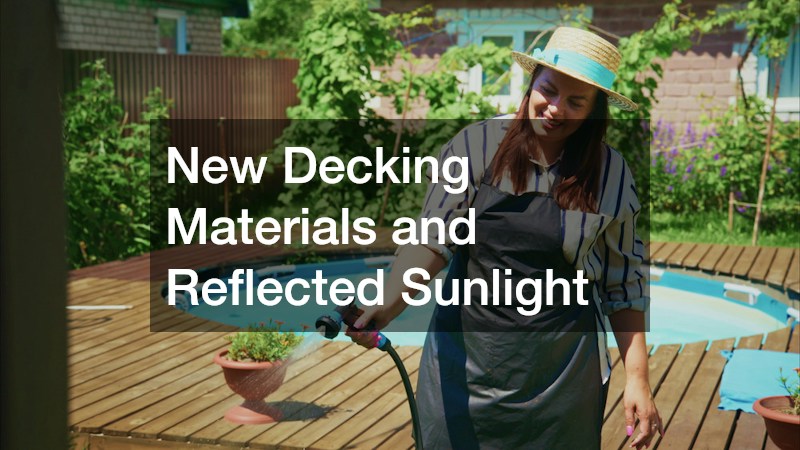
Decking choice matters more for your cooling system than most homeowners realize. Traditional wood decking tends to absorb heat and release it slowly, while composite decking is engineered to resist moisture and fading but can retain surface heat differently depending on its color and finish. Darker composite boards in particular can reach high surface temperatures in direct sun, and if the deck is close to your home’s siding or windows, that heat can radiate inward and add to your cooling load.
Choosing lighter tones and ensuring proper spacing between your deck and the house can reduce this effect considerably. It’s also worth considering the deck’s orientation, since a west-facing deck exposed to afternoon sun will generate more heat than one shaded by trees or the house itself.
- Choose lighter or sand-toned colors to minimize heat absorption
- Leave adequate ventilation space between decking and exterior walls
- Add shade elements like umbrellas or pergolas over heat-prone areas
- Consider tree placement to naturally shade afternoon sun exposure
Landscaping Changes That Block Natural Shade
Removing mature trees to make room for a new patio or play area is common during backyard renovations, but it eliminates a natural source of shade that previously helped cool your home’s exterior walls and roof. Without that shade, sunlight hits your house more directly, raising indoor temperatures and increasing the workload on your cooling system. This effect is especially noticeable on south- and west-facing walls, where afternoon sun exposure is already intense during summer months.
If you’re redesigning your yard, consider replacing lost shade with strategically placed new trees, shrubs, or shade structures rather than leaving the area fully exposed. Even partial shade over exterior walls or windows can measurably reduce the heat your home absorbs each day.
- Replant fast-growing shade trees on the sunniest sides of your property
- Use trellises or climbing vines for quicker shade coverage
- Install retractable awnings over south- and west-facing windows
- Time major landscaping removal for cooler seasons when possible
Backyard upgrades can absolutely coexist with a well-functioning cooling system, but only if you plan with your AC unit’s needs in mind from the start. Think about placement, materials, and airflow before you finalize any renovation, and keep an eye on your energy bills and system performance in the weeks after a project wraps up. If you notice your system running longer or less efficiently than before, don’t wait until it becomes a bigger issue to have it checked. A little foresight now means you’ll get to enjoy your new outdoor space without sacrificing comfort indoors.